GREG NISSAN: There’s a technique I associate with your writing: including various points on the journey of translation in the text. Lines repeat themselves—one in a more contemporary English, one in a more transitory state or Middle English. The work of the middle ground has so often been scrubbed from literary cultures, and it seems that the middle ground is precisely where you work. Is that just a natural result of adaptation as a practice, or is it something you do intentionally?
CAROLINE BERGVALL: That’s right. I have it a bit in Drift as well, with “The Seafarer,” using a process of translation as a way to reinvent or recreate the final word so that by explicating different spellings, different words for the same words, or through homophonic translation, there’s historical depth. It opens up the semantic field. It’s a way of writing.
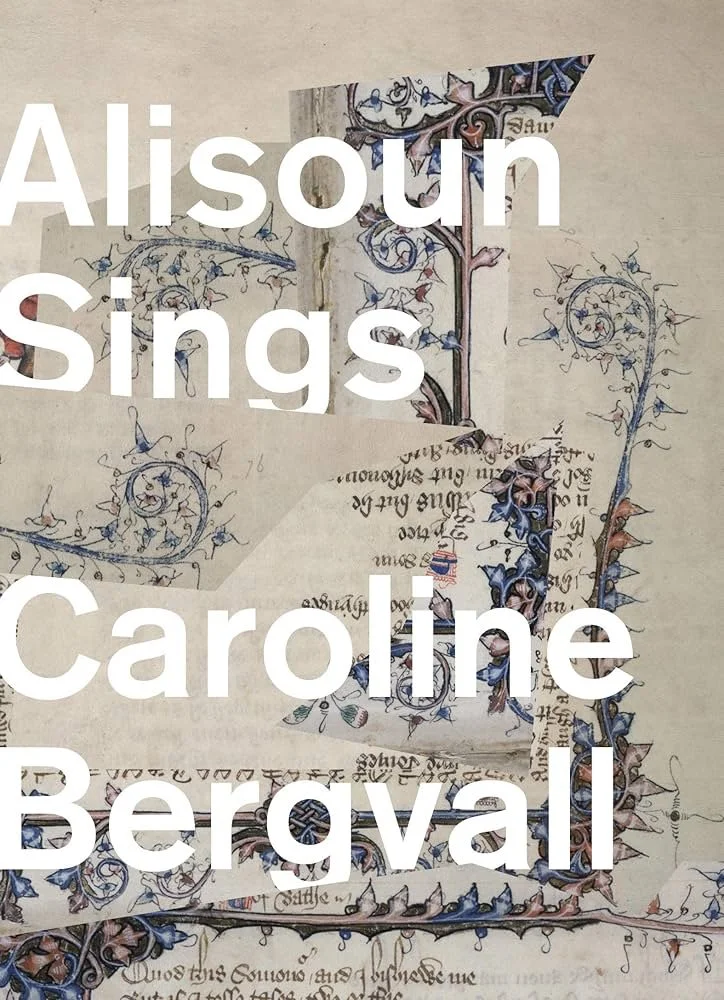
In Alisoun you find it also in the pronouns, with “het, hem, em,” which allows us to rethink what is actually being said: Is it a pronoun? Is it a verb? That kind of play on the pronoun is similarly translated. Rather than having a translator go from A to B, it becomes an AB-type thing. Translation doesn’t have a resting point neither here nor there. But it spans that stretch. It comes across so many interactions. There’s no final mastery in translation because it’s taken over by the performative one way or another.
READ MORE